
Design and its role: 7 levers that realistically deliver business results
In 2025 design is growth and lower risk. I show 7 levers and a simple plan on how to align UX with KPIs, costs, and compliance.
This text is a cheat sheet for those who need to defend the design budget. Not about "pretty screens," but about what can be measured: revenue, cost, risk. Below are 7 levers and a simple implementation plan.
Metrics instead of opinions: HEART + GSM
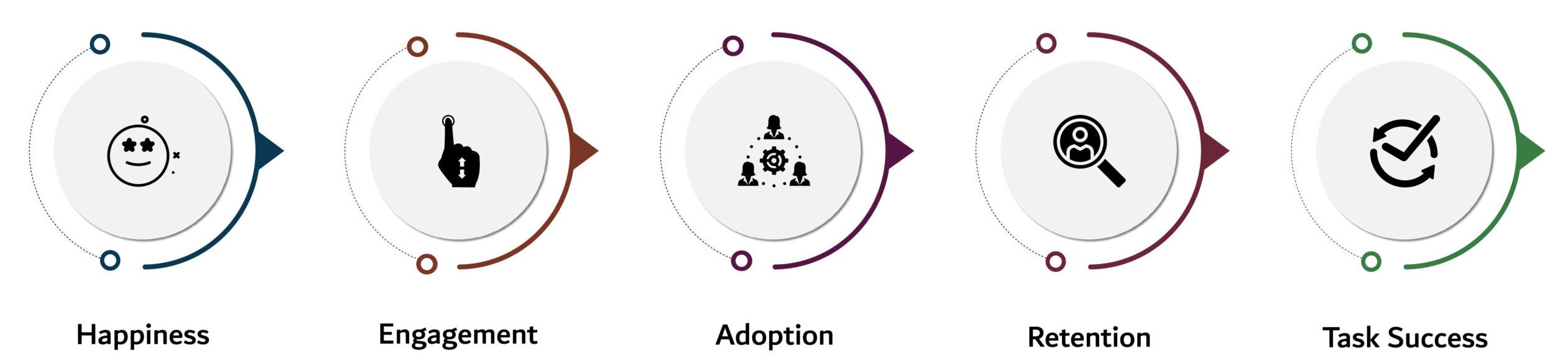
Instead of arguing about taste, I start with HEART (Happiness, Engagement, Adoption, Retention, Task success) and the Goals‑Signals‑Metrics process. This is a common language between UX and business that facilitates setting goals and assessing outcomes.[6]
How to use it immediately
- Translate business goals into UX metrics: e.g. Task success in checkout → conversion and revenue per user.
- Report per user to distinguish base growth from real experience improvement.[6]
Accessibility as growth and compliance
Scale: about 1.3 billion people experience significant disability (1 in 6).[2] This is not a niche – it is a real market and real needs.
Market and law: The European Accessibility Act comes into effect on June 28, 2025 and covers, among others, services, mobile applications, consumer devices, and terminals.[4]
State of the web: by 2025, 94.8% of home pages had detectable non-compliance with WCAG 2.2 A/AA. This is a quick map of investments with high ROI.[3]

What to implement
- Minimum standard WCAG 2.2 AA in Definition of Done.
- Accessibility audits and tests with users with disabilities in every release.
- Compliance plan with EAA for products and service channels.[4]
Design systems and tokens as OPEX leverage
Design system reduces UX/UI debt and shortens delivery time. Design tokens standardize colors, typography, and spacing, and their standards are currently being developed by the Design Tokens Community Group (W3C). This provides consistency across channels and technology stacks.[9]

What to implement
- A roadmap of critical components for top flows.
- A token repository as a single source of truth and pipeline to the front-end.[9]
Research and experiments reduce risk
Usability studies and A/B tests work when metrics are tied to business goals. NN/g case studies show how to connect UX metrics with outcomes.[8a]
What to implement
- A research plan based on hypotheses with success metrics at the function and product level.
- A quarterly UX benchmark based on a basket of HEART metrics.[6]
Privacy by design and governance at the project stage
Art. 25 GDPR imposes the obligation of data protection by design and by default. EDPB guidelines emphasize the effectiveness and measurability of implementations, not declarations.[5]
What to implement
- Data maps and minimization as acceptance criteria for the project.
- Explicit indicators of data protection effectiveness (e.g. decrease in complaints, shorter time to fulfill rights).[5]
AI in products: responsibility and competitive advantage
EU AI Act has a phased timeline. From February 2, 2025, bans on unacceptable practices will apply, August 2, 2025 will see requirements for GPAI, and August 2, 2026 will start obligations for high-risk systems. This affects UI, informing users, and documentation.[8]
What to implement
- Transparency interface patterns (when AI is active, what the risks are).
- Error reporting paths for the model and explainability elements in UX.[8]
Hard data on returns: IBM and TEI case
In Forrester's Total Economic Impact analysis for IBM Enterprise Design Thinking, the cumulative ROI was 301% over a 3-year horizon (composite model, commissioned study). This is a good benchmark for building your own ROI calculations.[7]

How to calculate ROI from design in your company
General formula ROI = [(incremental revenue + cost savings − initiative cost) / initiative cost]
Sources of effect that most often "tie together" financially
- Conversion and average basket after improving key flows.
- Retention and adoption of new features.
- Delivery time thanks to the design system and tokens.[9]
- Service cost due to better understandability and accessibility (fewer tickets).[3]
- Legal risk due to privacy by design and compliance with EAA.[5][4]
90-day implementation plan
Days 1–30
- Audit of the 3 most important end-to-end flows.
- Define G‑S‑M and the HEART basket for the product.[6]
- Accessibility scan and compliance plan with EAA.[4]
Days 31–60
- Privacy by design workshops for product teams.[5]
- Start of the backlog of components and design tokens repo.[9]
- Hypotheses for 2–3 A/B experiments for commercial goals.[6]
Days 61–90
- Implementation of the first components and refactoring of critical screens.
- Baseline report: conversion, retention, task completion time, ticket volume, accessibility metrics, privacy metrics.
- Roadmap for the next 2 quarters with KPIs and responsible parties.
Frequently asked questions by CFOs
Is design a cost or an investment?
An investment – and one that can be accounted for in revenue, cost, and risk metrics. Public data confirms higher growth rates and TSR among design leaders.[1]
How to avoid the "theater" of innovation?
Connect every experiment with the HEART metric and business KPI. Ensure the Definition of Done includes WCAG 2.2 AA and privacy by design.[6][3][5]
References
- McKinsey, The Business Value of Design – top quartile: +32 p.p. in revenue and +56 p.p. TSR. PDF.
- WHO, Disability and Health – Key facts: 1.3 billion people, 16% of the population. Link.
- WebAIM, The WebAIM Million 2025: 94.8% of pages with detectable non-compliance with WCAG 2.2 A/AA. Link.
- AccessibleEU, The EAA comes into effect on 28 June 2025: scope of products and services. Link.
- EDPB, Guidelines 4/2019 on Article 25 – Data Protection by Design and by Default: requirement for effective implementation. PDF.
- Rodden, Hutchinson, Fu (Google), HEART + Goals‑Signals‑Metrics, CHI 2010. Description | PDF.
- Forrester TEI for IBM Enterprise Design Thinking: ROI 301% (3 years, composite model).
- EU AI Act – milestones: 2.02.2025 (bans), 2.08.2025 (GPAI), 2.08.2026 (high risk). Latham & Watkins | Goodwin.
- NN/g on metrics and ROI – materials and case studies.
- Design Tokens Community Group (W3C) – specification 2025.10. Announcement | Specification text.