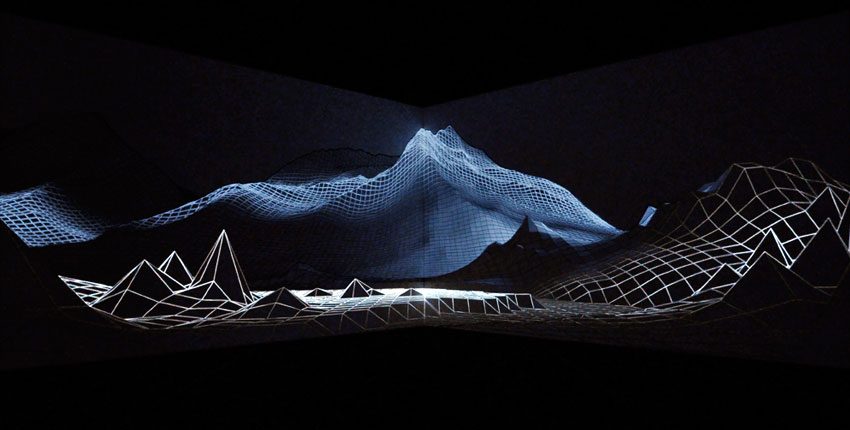
3D Mapping: An Illusion That Sells
Screens are invisible now. 3D mapping still stops people by turning architecture into a story—even with high costs.
3D Mapping: When a Facade Becomes a Screen
In digital advertising we often hear that only what is clickable matters. 3D mapping proves something else: scale, context, and a well‑designed image can stop people on the street without a single tap.
What is it, exactly?
3D mapping (video mapping) is projection on a three‑dimensional object: a building façade, a car body, a stage set, sometimes even a cake or a product installation.
The core is geometry. The animation is built to fit real details — cornices, windows, columns, car panels. That’s why a static surface can appear to move, bend, or change texture right in front of you.
The architecture of attention
Most urban ad formats became invisible. The brain filters out billboards and citylights. 3D mapping breaks the pattern because it changes a real place. It turns a familiar façade into a stage.
It creates a here‑and‑now moment. This is not content you scroll past — it’s an event you physically witness. That’s why it works.
Cost vs. effect (earned media)
Let’s be honest: mapping is expensive. In Poland it’s usually used by big brands, cultural institutions, or cities promoting festivals. Budgets start at several thousand PLN, and with complex architecture or longer narratives they can easily exceed 100,000 PLN.
So why do brands still invest? Because of earned media. A strong mapping works twice:
- On site — as a shared, memorable experience.
- Online — as video content that people share on their own.
The organic reach often outweighs the cost of production.
Not only buildings
Although mapping is known for large architectural projections, the technique is now used in smaller contexts too:
- Micro‑mapping: projections on products (e.g., sneakers in a shop window), allowing form and color to shift in real time.
- Gastro‑mapping: table projections in restaurants, synced with the dishes being served.
- Scenography: projected environments replacing physical stage sets.
3D mapping isn’t just about projectors or spectacle. It’s a narrative tool that temporarily bends reality and turns ordinary objects into meaning.